


Filters & Sorting

Leadership Beyond the Playbook: Lessons from Working with Roopa Kudva

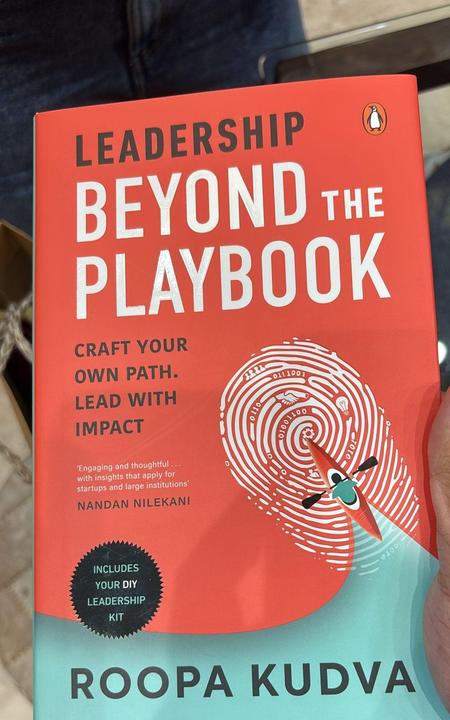
Leadership Beyond the Playbook: Lessons from Working with Roopa KudvaNandan Sharalaya10 min read·Oct 12, 2025A personal reflection on leadership, empathy, and growth inspired by Roopa Kudva’s new bookI picked up Leadership Beyond the Playbook at Bahrisons, the iconic bookstore in Delhi, on a quiet afternoon before a flight. I slipped it into my backpack, settled into my seat, and somewhere between take-off and landing, I had finished all 200-plus pages.Press enter or click to view image in full...

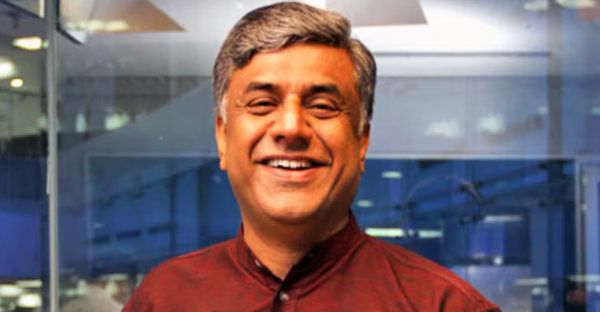
India Needs Leaders like Prof. Rajeev Gowda — My Reflections of Working with the Finest Boss

In the summer of 2014, fresh out of graduate school at SOAS, I found myself at a crossroads. Instead of delving into a job search in London, I yearned for home and the familiar streets of Bangalore. When I touched down in Bangalore, I faced a blank canvas for my future.Back then, I was a quintessential generalist. I had had only one job till then — the LAMP Fellowship, spending a year working with a Member of Parliament. The MP I had worked for, Dr. Ajoy Kumar, was someone who valued fresh ideas...

Collaborative Communities: The Missing Piece in Indian Cities’ Puzzle | Omidyar Network India

In 2020, a group of Mumbaikars came together to better understand the decision-making process on public infrastructure and services. They took part in Civis Innovation Foundation’s survey on participatory budgeting and voiced their opinion on the need for higher health budgets. Compiling responses from over 1,000 citizens, Civis presented the findings to members of the standing committee of Municipal Corporation of Greater Mumbai (MCGM). Soon after, MCGM increased the budget outlay for health, w

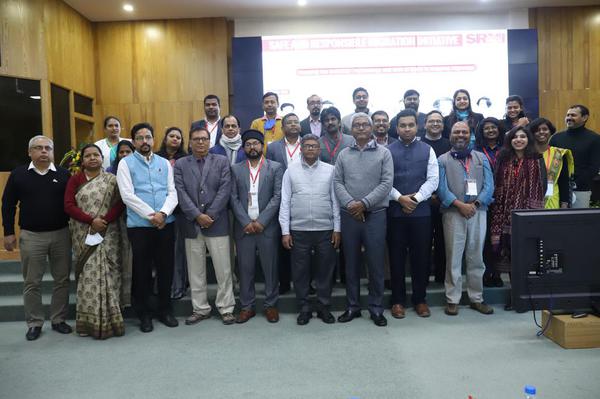
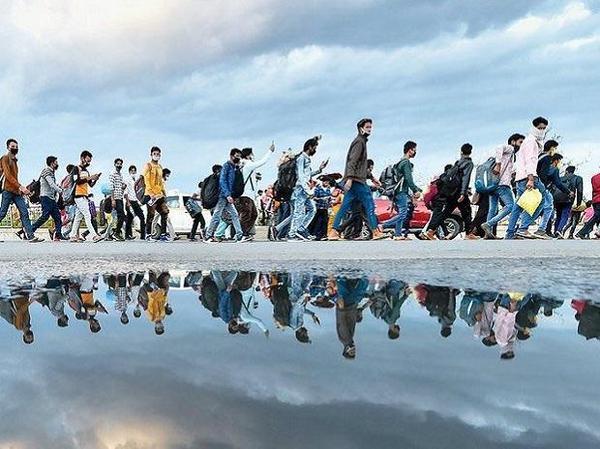
Building Sustainable & Scalable Migration Practises: Safe & Responsible Migration Initiative

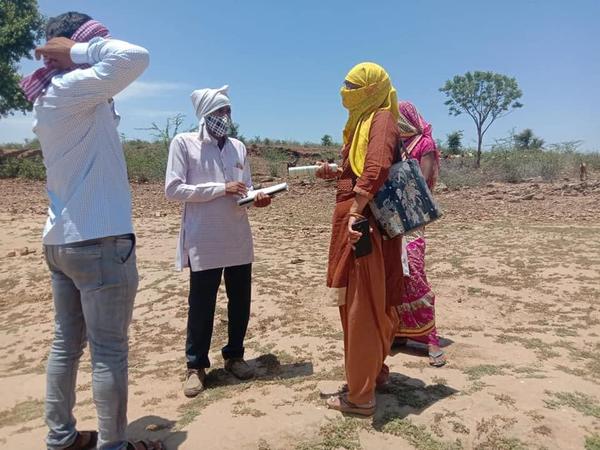
The onset of the COVID-19 pandemic and the resultant humanitarian crisis brought migration to the fore in the Indian policy and development discourse. It made visible the significant role of migrant workers in our cities and economy and also made visible the multiple vulnerabilities they experienced. It became obvious that a robust society and economy would need significant focus on improving the safety nets and living conditions of low-income migrants, especially those crossing state borders.

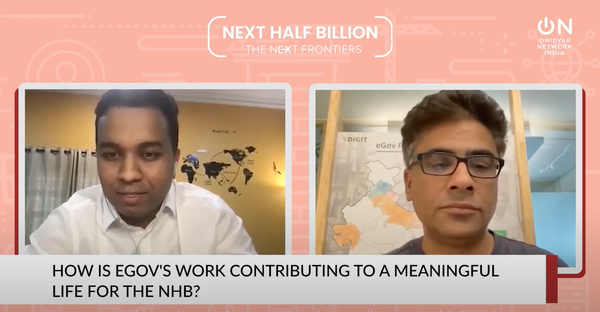
Building Digital Rails for Urban India - Why We Invested in eGovernments Foundation

Setup in 2003, eGovernments Foundation aims to catalyse urban transformation and enhance ease of living and ease of doing business at a national scale. To that end, it builds and deploys DIGIT, a National Open Digital Ecosystem (NODE) in cities across India. The platform helps digitize and automate back-end processes and enables citizens to access government services on their mobile phones.

Leveraging the Power of Collaboratives to Advance Change: Why We Invested in RCRC’s Research Initiative

In 2020, a number of prominent livelihoods focussed Civil-Society Organisations (CSOs) across the country came together to form a National Coalition to enable a Rapid Rural Community or RCRC. Realising the devasting impact of the pandemic very early on, these organizations quickly understood that there was much to do together than they could otherwise do alone. One of the first tasks the coalition took up was to devise surveys to identify the short, medium and long-term impact of the pandemic o

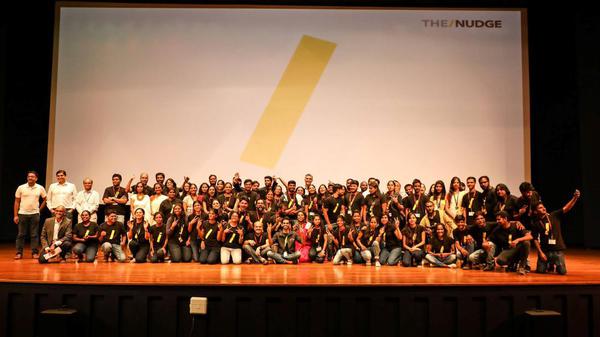
An Entrepreneurial Approach to Tackling Poverty: Why We Invested in The/Nudge Foundation

India suffers from extreme economic inequality with 373 million ‘multi-dimensionally poor’ and 145 million Indians living below the poverty line, as per World Bank estimates. A recent 2020 report by the World Economic Forum also states that Indians born into poor families will take seven generations to reach the country’s mean income. With India accounting for 60% of the global increase in poverty, there is an urgent need for innovation and a strong bias for action.

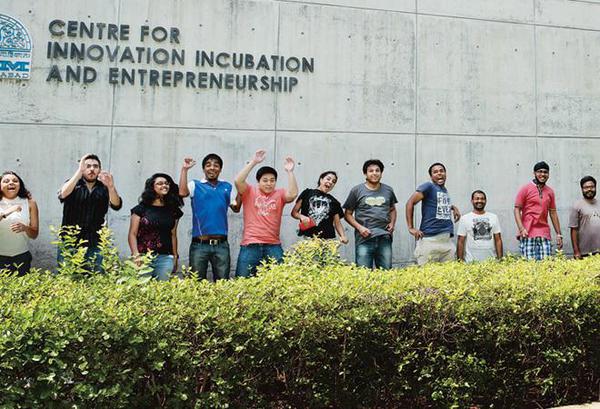
Why we are partnering with CIIE.CO – Flourishing entrepreneurship in CivicTech, PropTech & LegalTech across India

History is replete with narratives of human resilience through ingenuity often also termed as innovation. Innovation combined with entrepreneurship has played a critical role from the industrial revolution to the present digital revolution in wresting control in favour of progress and human agency. India has leapfrogged legacy systems to innovate on the shoulders of millions of smartphones and access to internet. There was a unique convergence of digital infrastructures such as India Stack, pol

State Government-led collaboratives shed light on urgently needed solutions for migrant workers

The pandemic has highlighted the poor state of India’s 80-130 million migrant workers, who make up the informal workforce, powering high-growth sectors such as construction, manufacturing and urban services in India. The second COVID wave has been a particularly sobering reality check. It has shown the complex nature of this issue and the deep, multi-stakeholder resolve needed to secure a paradigm shift in the livelihoods and living conditions of migrant labour. The recent resurgence of COVID an

Why Effective Global Climate Governance Might Just Remain a Utopian Dream

175 countries signed the historic Paris climate deal in New York on 22nd April to coincide with International Earth Day, a deal that is being seen by many as our last chance to stabilise carbon dioxide concentration at 450-550 ppm and limit change in temperature to 1.5-2 degrees. Speaking at the event, actor Leonardo Di Caprio’s words reiterated the desired urgency, Whether this deal signed effectively puts us on the pathway to a secure climate future is debatable. It does initially succeed

Climate change: Powerful US cities are filling the space vacated by Donald Trump

When US President Donald Trump announced that his country would be pulling out of the Paris agreement, the immediate reaction across the globe was one of despair, anger and helplessness. The Paris agreement is widely seen as the last opportunity for the world to unite and limit the increase in global temperature to 2 degrees Celsius. How can this international agreement remain relevant when the world’s second-largest polluter chooses to remain outside its ambit and is not willing to be held res

Why We Need To Actively Involve Indian Citizens In Urban Planning

Over the years, governance structures in most Indian cities have followed a simple and traditional top-down approach with little or no room for citizen engagement. People rely on the good intentions of the mayor or the municipal corporation, who they trust will take decisions in the overall interest of its citizens. This system has worked fairly smoothly in most Indian cities as the focus of urban local bodies has essentially been on the provision of basic services. And while expectations may ha

Why Paris Must Not Repeat Kyoto's Mistakes

World leaders and climate negotiators from 195 countries are in Paris for the 21st Conference of Parties Summit (COP21), with the intention of hammering out a new international climate deal. Over the years, little has been achieved in our fight against climate change. While the current greenhouse gas concentrations in the atmosphere are already close to 400 parts per million (from pre industrial revolution levels of 273ppm), in a business as usual scenario, this could eventually touch 750ppm (a

Can government procurement shift the trajectory of steel decarbonisation in India?

This is the first of a three part series of blogs on Green Public Procurement (GPP) of low carbon steel in India. In early 2023, we found ourselves asking a simple question: can the government’s purchasing power help accelerate decarbonisation in one of India’s high emitting sectors? Steel is essential to India’s growth story but is also one of its most carbon-intensive industries. Policy discussions and industry strategies have largely concentrated on supply-side innovations and technolo...

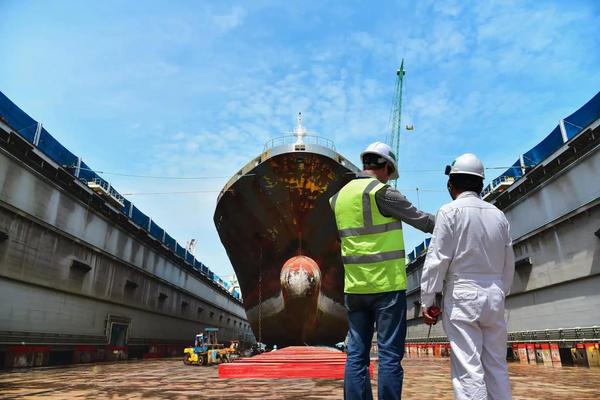
Can ship recycling green India’s steel sector? 5 key findings from our research

Steel forms the backbone of modern economies, and India, as the world’s second-largest steel-producer, is on a path of rapid expansion. By 2030, India’s steel production is projected to double, driven by rising demand from infrastructure and manufacturing. However, this growth comes with a significant environmental cost—steel production accounts for 12 per cent of India’s greenhouse gas emissions, a number far higher than the global average. For India to achieve its net-zero ambitions, decarboni...

Turning the Tide: Ship Recycling as a Source of Green Steel in India

India stands at a critical juncture in its journey toward steel sector decarbonisation. As the world’s second-largest steel producer with a significant carbon footprint, the country faces the dual challenge of meeting growing steel demand while simultaneously reducing emissions from the industry. We set out to explore the availability of scrap steel from India’s ship breaking industry, partnering with the Climate Group and PwC India to perform this research. However, the research quickly reve...

Forging a sustainable future: India’s bold roadmap for green steel production

Steel is essential to India’s industrial and infrastructure development, but its production carries a significant environmental cost. The sector accounts for 10-12% of the country’s total greenhouse gas emissions. As the global shift towards net-zero accelerates, the steel industry must evolve or face the risk of being left behind. That’s why the Ministry of Steel’s new roadmap – released a few weeks ago – is a pivotal moment in decarbonising a challenging yet vital industry. Titled “Greenin...

Leading with Purpose

Shloka Nath, CEO, ICC, and Nandan Sharalaya, Senior Manager — India Climate Leaders Program, ICC, dwell on a much-awaited donor convening hosted by the India Climate Collaborative in Italy from 28 August to 1 September, 2023, and its significance in building India’s climate leadership. Nestled on the picturesque shores of Lake Como, Italy, The Rockefeller Foundation’s Bellagio Center has a storied history of fostering impactful initiatives that address global challenges. From its role in launch
Load More Articles

Subscribe to get sent a digest of new articles by Nandan Sharalaya

This site is protected by reCAPTCHA and the Google Privacy Policy and Terms of Service apply.